
Skip to content

Odoo ERP

Odoo is a modular business suite whose ERP apps cover accounting, inventory, purchasing, and manufacturing. You install the apps you need and add the rest later, which is what makes it reachable for a company that cannot buy a whole ERP at once. Nexio resells it, implements it, integrates it, and supports it afterwards.

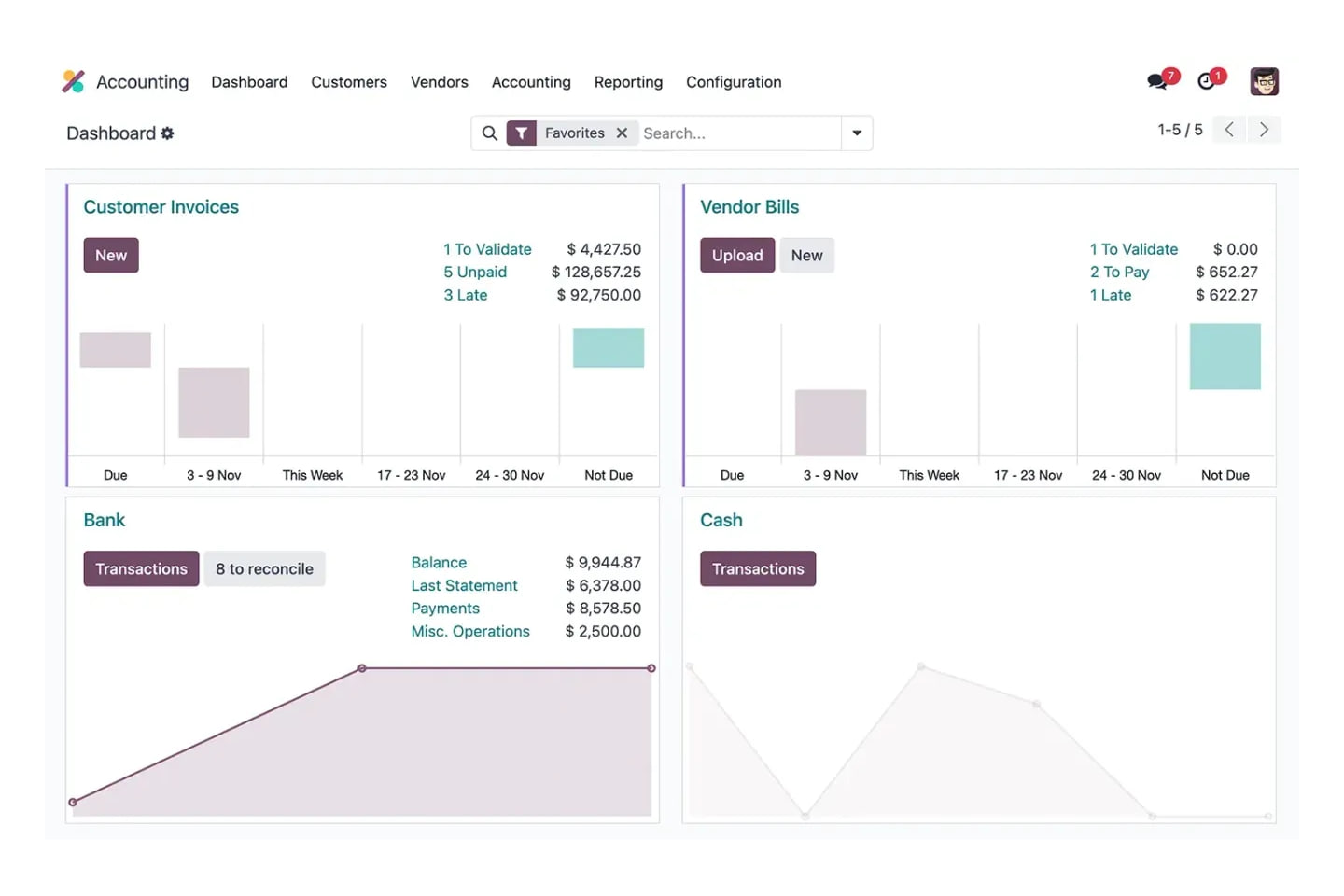
Odoo accounting dashboard with journal cards for bank, customer invoices, and vendor bills

Start with one app, not a whole ERP

Odoo is sold as separate apps that share one system: Accounting, Inventory, Purchase, Manufacturing, Sales, Project, and the rest. You adopt the ones you need now and add others when you are ready, instead of buying a whole ERP on day one and growing into it for three years.

That matters most for the companies an ERP usually prices out. A first phase can be accounting alone, live and useful on its own, with inventory and manufacturing following once the first is bedded in.
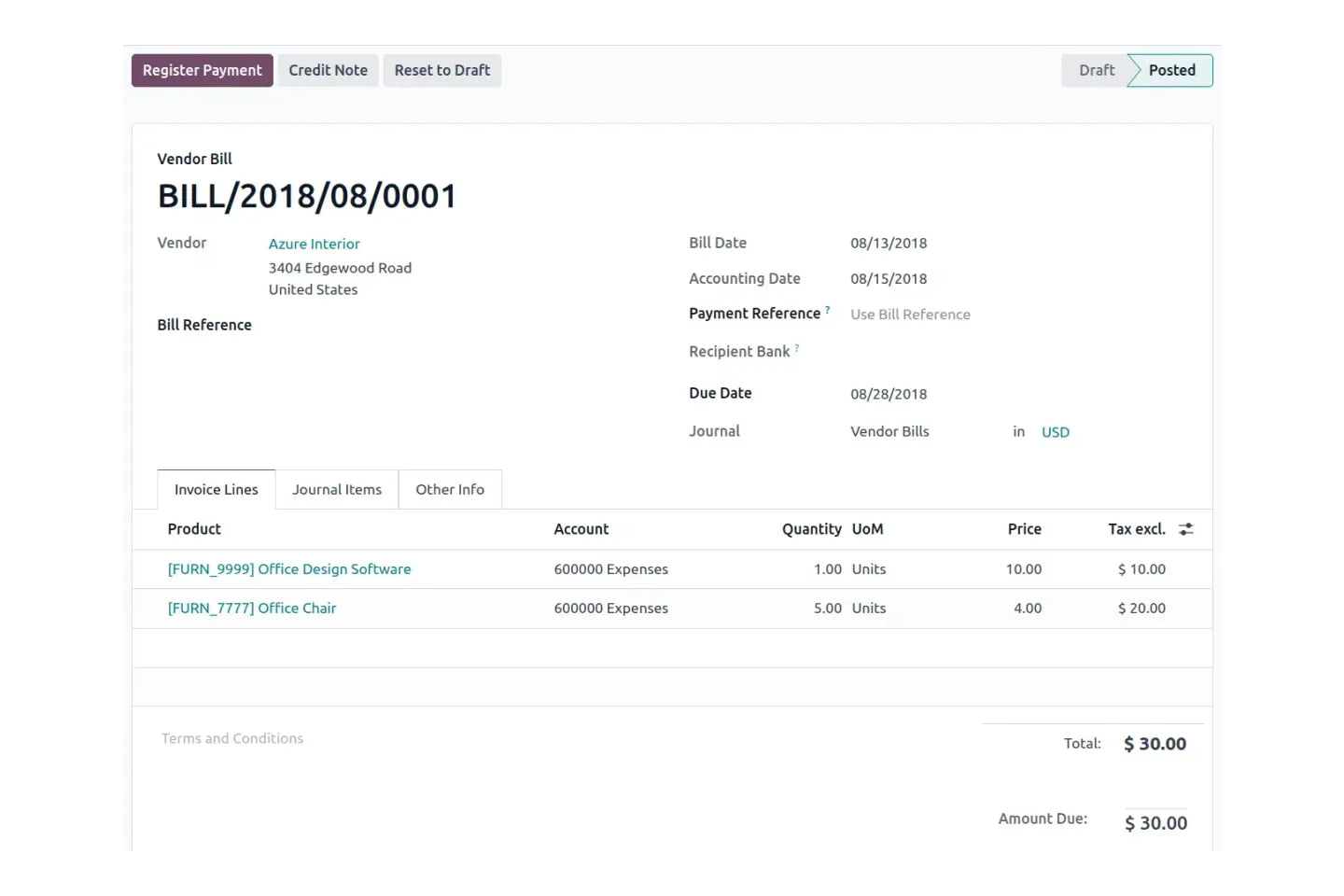
Odoo customer invoice with its line items and the journal entry it posts

Accounting that closes on time

Customer invoices, vendor bills, bank reconciliation, taxes, analytic accounting, and multi-currency all sit in one ledger. Each document shows the journal entry it posts, so a question about a number is answered by opening the number rather than by rebuilding it in a spreadsheet.

Because sales, purchasing, and inventory write to that same ledger, the month-end position is a report rather than a reconciliation exercise between four systems.

Odoo inventory overview with receipts, internal transfers, and delivery orders as cards

Stock you can actually trust

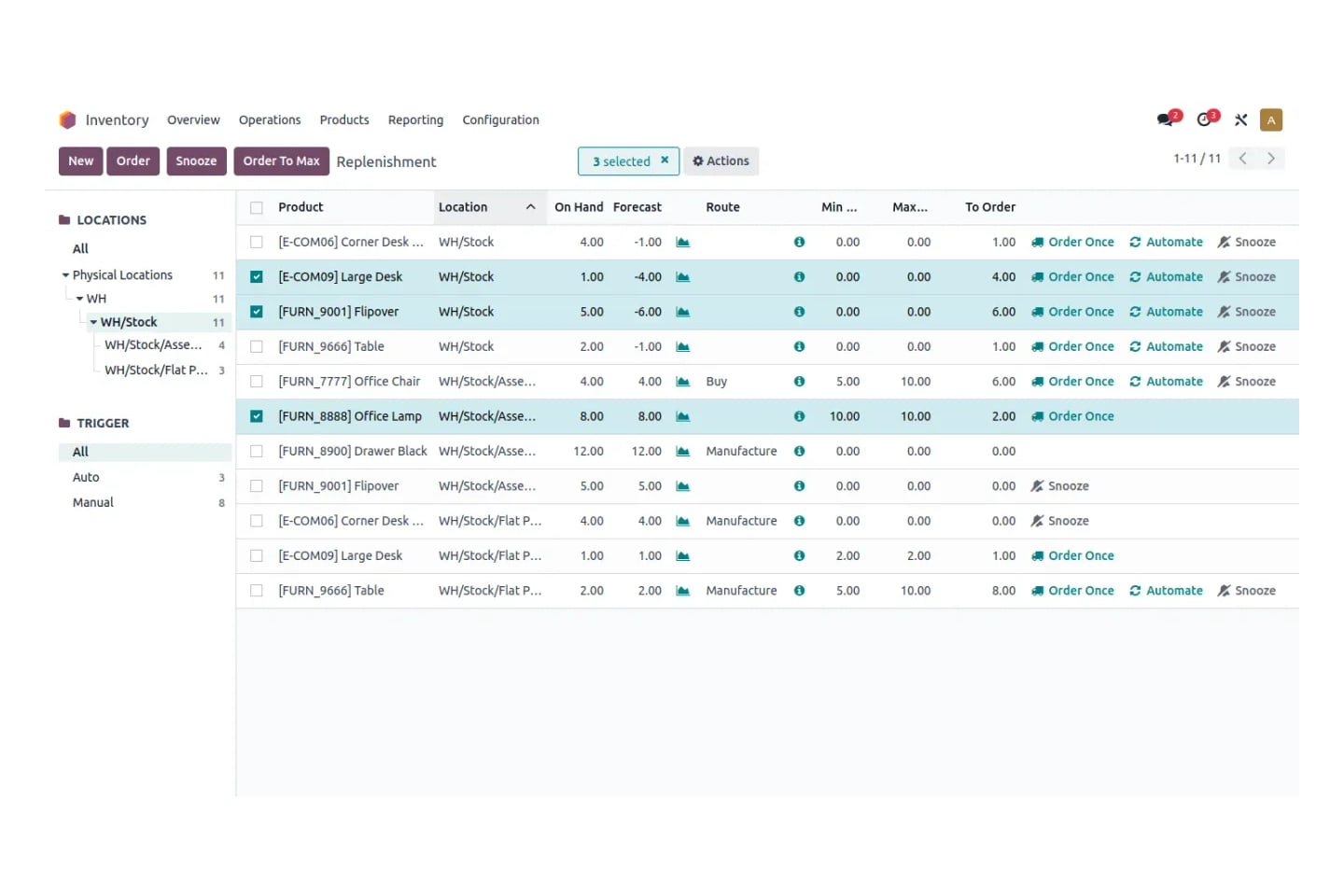
Receipts, internal transfers, and deliveries are tracked as operations against real stock, across multiple warehouses and locations. Reordering rules raise a purchase when stock falls below the level you set, rather than when somebody notices.

Every move is double-entry the way the ledger is, so the stock figure and the stock value agree by construction instead of by periodic correction.

Odoo lot and serial number traceability report following a batch through its moves

Traceability when someone asks

Lot and serial numbers follow goods through receipt, production, and delivery. When a customer or a regulator asks where a batch went, the answer is a report rather than an investigation.

For food, pharmaceutical, and manufacturing businesses this is usually the requirement that decides the system, and it is standard rather than an add-on.

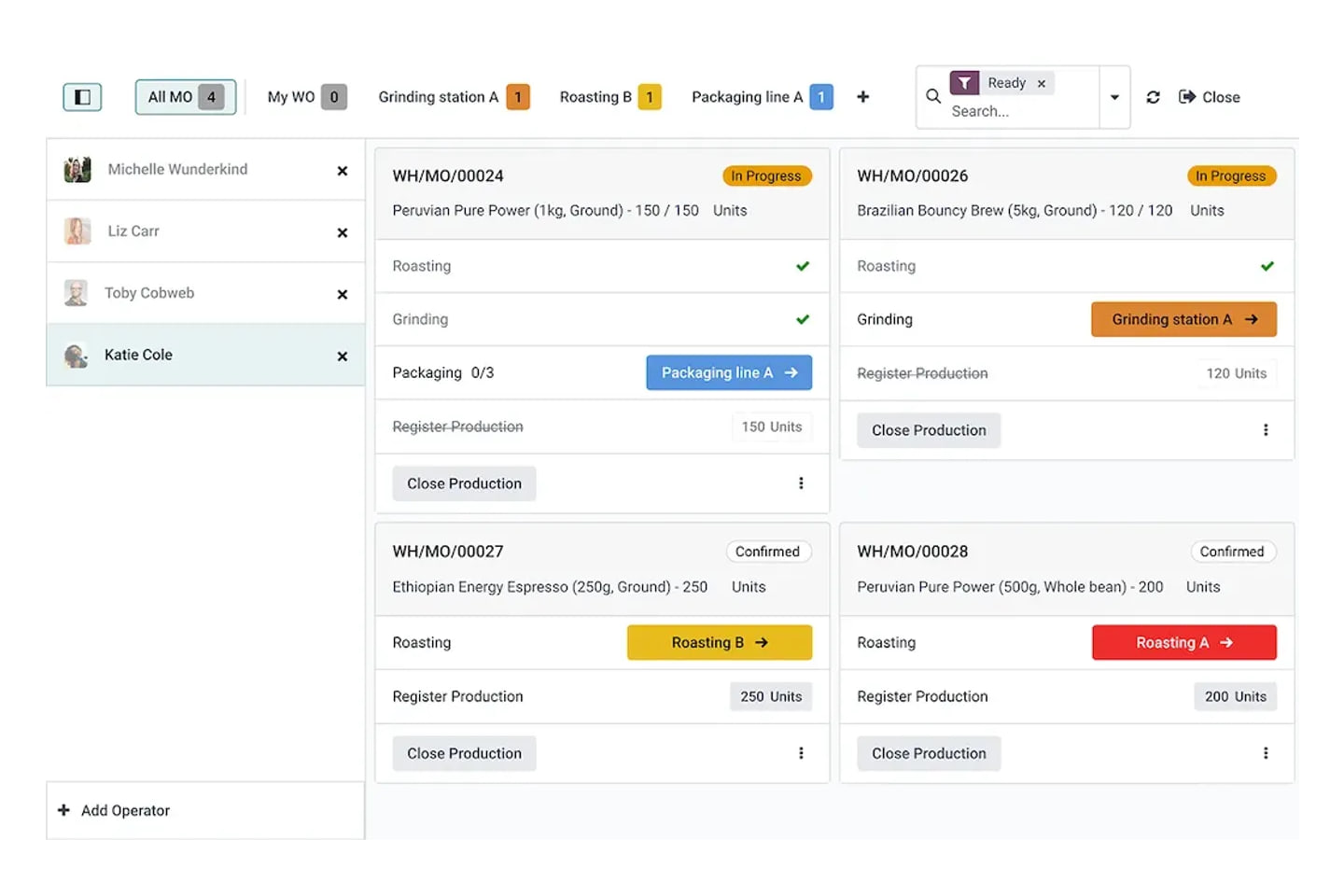
Odoo manufacturing orders overview listing orders and their state

Manufacturing on the same data

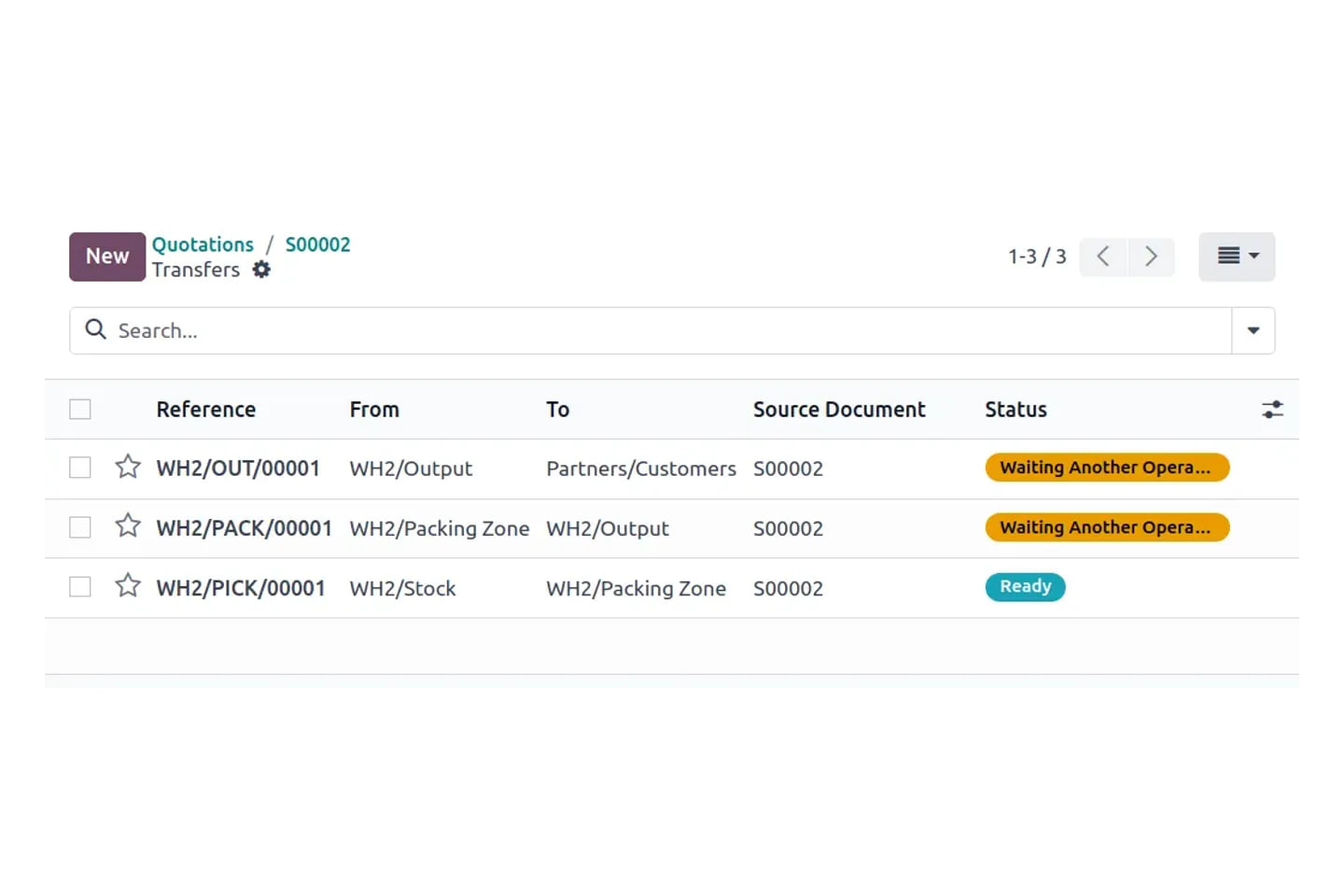
Bills of materials, manufacturing orders, work centres, and routings run against the same stock and the same ledger as everything else. Components are consumed and finished goods produced as real inventory moves, costed as they happen.

Maintenance, quality checks, and product lifecycle management are further apps on the same data rather than separate systems to reconcile.

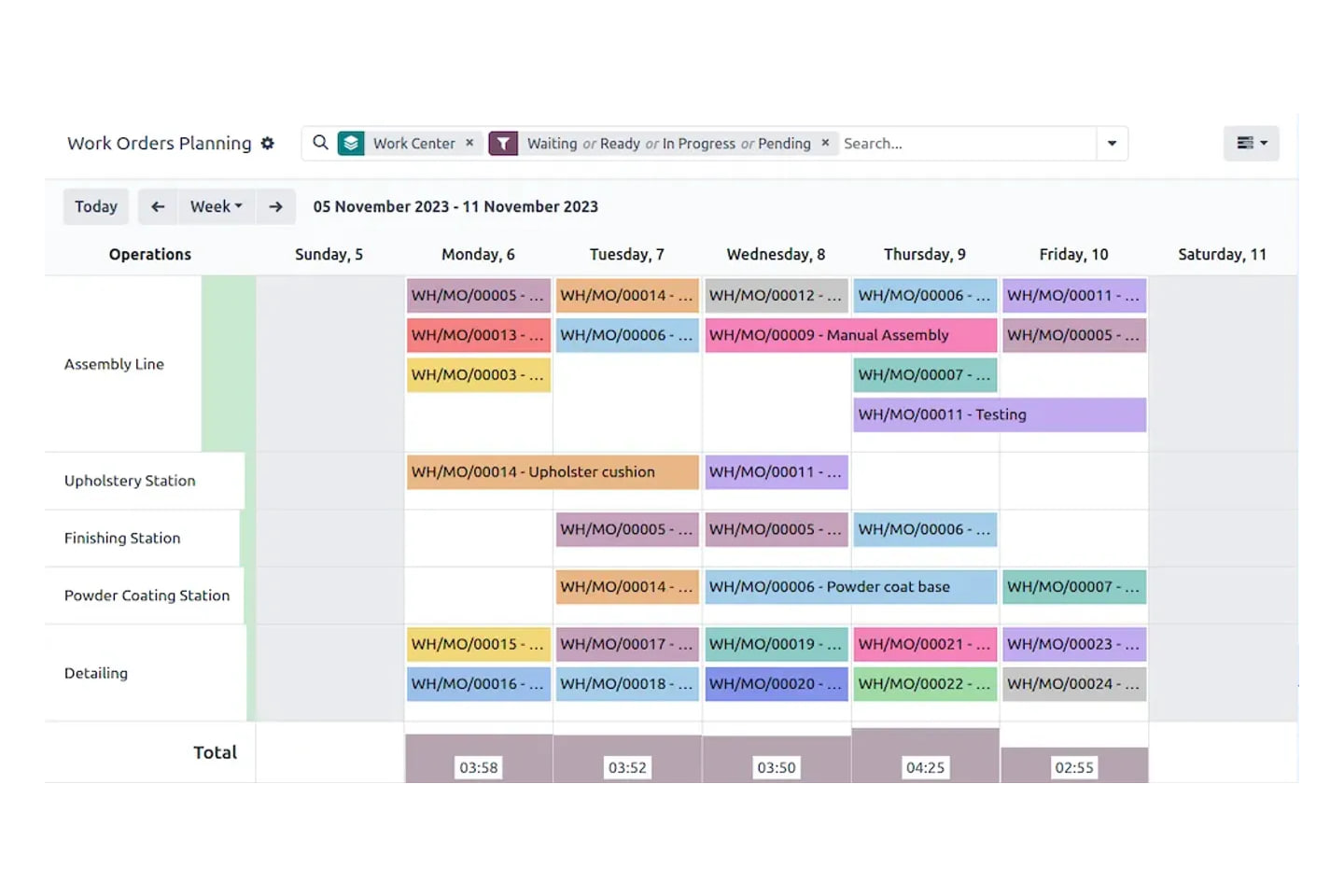
Odoo work order scheduling across work centres over a working week

Scheduling the shop floor

Work orders are scheduled across work centres with their capacity and their calendar, so a promise to a customer is made against what the floor can actually do rather than against optimism.

Operators report progress from the shop floor, and the schedule, the stock, and the cost of the order move together.

Analysts planning a phased rollout around a tablet

Open source, and what that is worth

Odoo Community is published under the LGPLv3 licence; Odoo Enterprise is a separately licensed subscription that adds further apps and vendor support. Both run the same core, and moving between them does not mean re-implementing.

The practical benefit is control. The data model is open and documented, custom modules can be written against it, and you are not asking a vendor for permission to change your own system. It also means an implementation partner can be changed without the software being held hostage.

Two colleagues going through printed documents together at a desk

Nexio’s role

Nexio resells Odoo and delivers it: deciding which apps belong in the first phase, configuring them to how you actually work, migrating your existing data, integrating the systems you keep, training your staff, and supporting it afterwards.

Ready to talk?

Tell us about your current setup and goals, and our team will put together a tailored proposal.